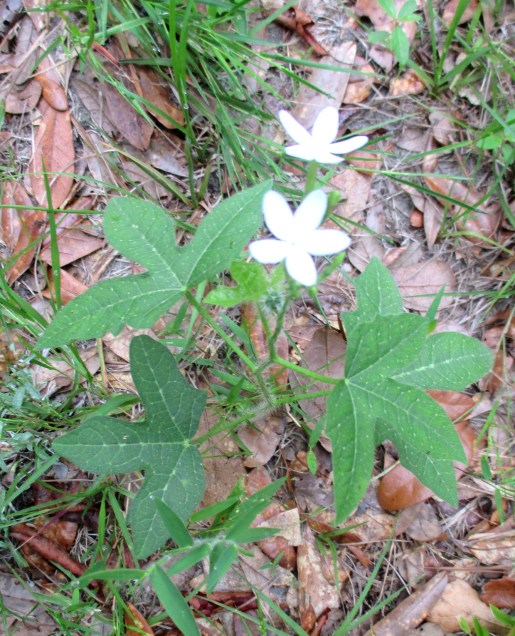
This is a common plant in Florida…the stinging nettle. In my yard at least, they seem to love growing in full sun in an open field. The leaves and stem are covered in little needles–a brush against one of these plants with bare skin causes an immediate stinging reaction, much like a jellyfish.
Fortunately, the sting doesn’t persist and can be soothed with most balms like calamine or witch hazel or an antihistamine cream. Bees and butterflies love the flowers, and evidently, this is a medicinal plant that when processed properly can be eaten. Please research further if you plan to attempt this as it apparently has to be done a certain way with young plants that haven’t bloomed yet.
This plant, Cnidoscolus stimulosus, is colloquially referred to as stinging nettle but is unrelated to other stinging nettles, Urtica species. They don’t bear a strong physical resemblance to eachother. Typically, when folks talk about preparing nettle leaves as food or medicine, they are referring to Urticas, though you can eat the roots of Cnidoscolus cooked, if you have the gumption to dig for them. I’ve heard they’re quite tasty.
 gainst one of these plants with bare skin causes an immediate stinging reaction, much like a jellyfish.
 Haint's Retreat
This plant, Cnidoscolus stimulosus, is colloquially referred to as stinging nettle but is unrelated to other stinging nettles, Urtica species. They don’t bear a strong physical resemblance to eachother. Typically, when folks talk about preparing nettle leaves as food or medicine, they are referring to Urticas, though you can eat the roots of Cnidoscolus cooked, if you have the gumption to dig for them. I’ve heard they’re quite tasty.
LikeLike